Independent. Cited. San Antonio & surrounding metros.
Foundation repair,
told straight.
San Antonio sits on some of the most reactive clay in North America. We tell you what's actually wrong, what real repair costs, and how to evaluate a contractor — and we'll match you with a vetted San Antonio foundation specialist for a free quote.
Free SA quote
No obligationStart where you are
Start with the question you came here to ask
Most foundation guides are written by contractors selling repairs. Ours are drafted for homeowners and cite engineering standards directly — ACI 224R-01, ICC-ES AC358, IRC R408, ASCE Texas Section Guidelines v3 — including the answer to whether you actually need repair at all.
How much does foundation repair cost?
National + Texas pricing by method, depth, and project size
Read the guideDo I actually have a foundation problem?
Symptom triage and the 3-tier urgency decision aid
Read the guideWhich repair method fits my home?
Push piers vs helical vs concrete pressed pilings — compared
Read the guideWhat does this crack mean?
Read crack width and orientation against ACI 224R-01
Read the guideWill my insurance cover this?
HO-3 vs HO-5, Texas HO-143TX, and how to file a claim
Read the guideDo I need a vapor barrier?
Mil-thickness, IRC R408.3, and what to install where
Read the guideSan Antonio, TX
Why San Antonio homes need different answers
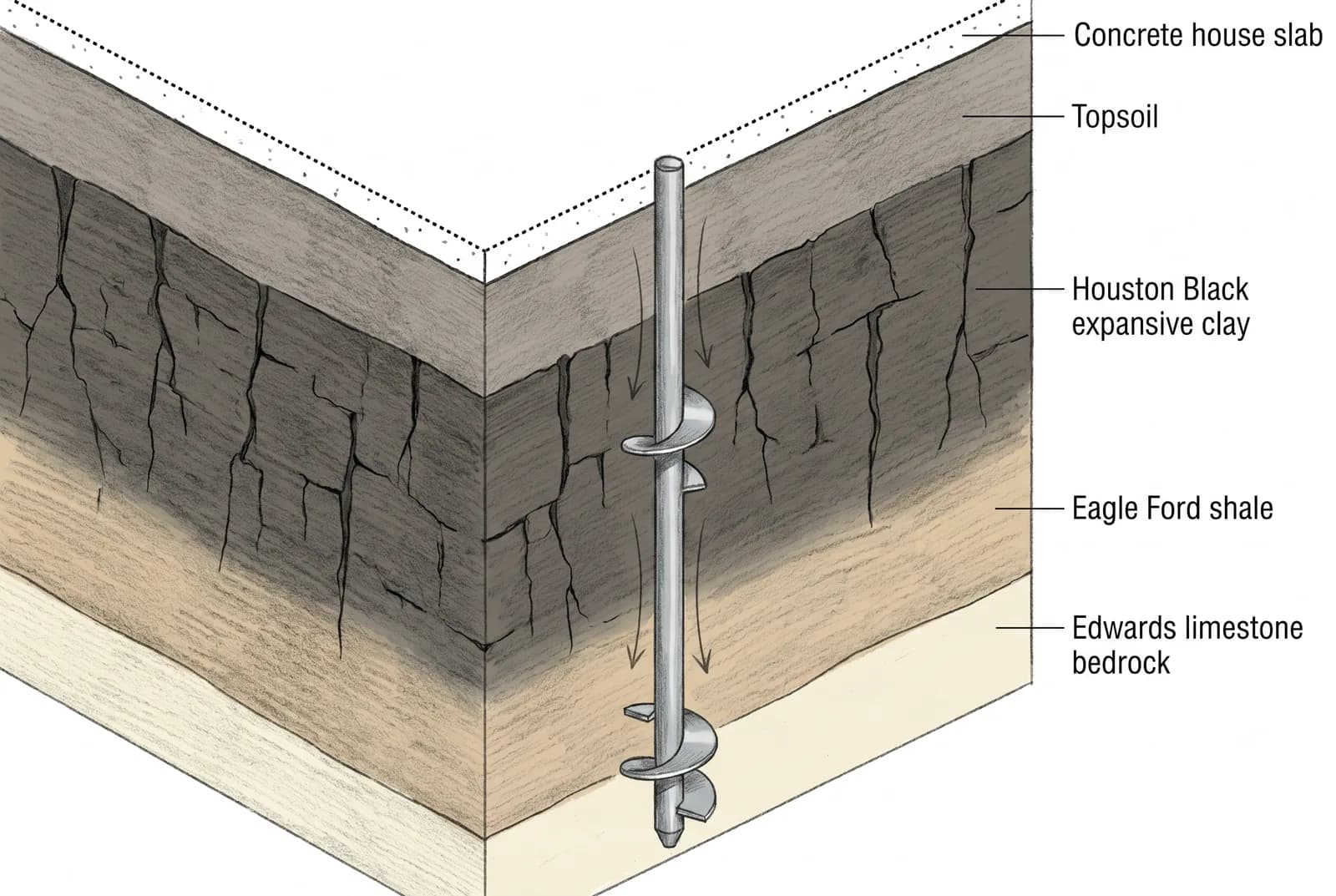
San Antonio sits at the boundary of two very different geologies: expansive Houston Black clay south and east of town, shallow Edwards Plateau limestone north of the Balcones Escarpment. That's why one neighborhood's repair plan is the wrong answer for another.
Add the 2022–2025 drought — the second-worst in a century per the Edwards Aquifer Authority — and you have the perfect setup for differential foundation movement. The fix isn't more piers; it's the right piers in the right strata.